How to Select Shipbuilding Steel Plates for Hull Construction
Selecting shipbuilding plates for hull construction means weighing grade, thickness, toughness, weldability, and corrosion exposure together, not picking whichever plate looks strongest on paper. A plate certified for the main deck will not suit the bottom shell or a bulkhead under different loading. Naval architects and procurement teams work from the approved vessel design and the applicable classification rules to narrow the specification down. Assuming one grade fits every hull section creates a risk that surfaces only after the vessel enters service.
What Are Shipbuilding Steel Plates?
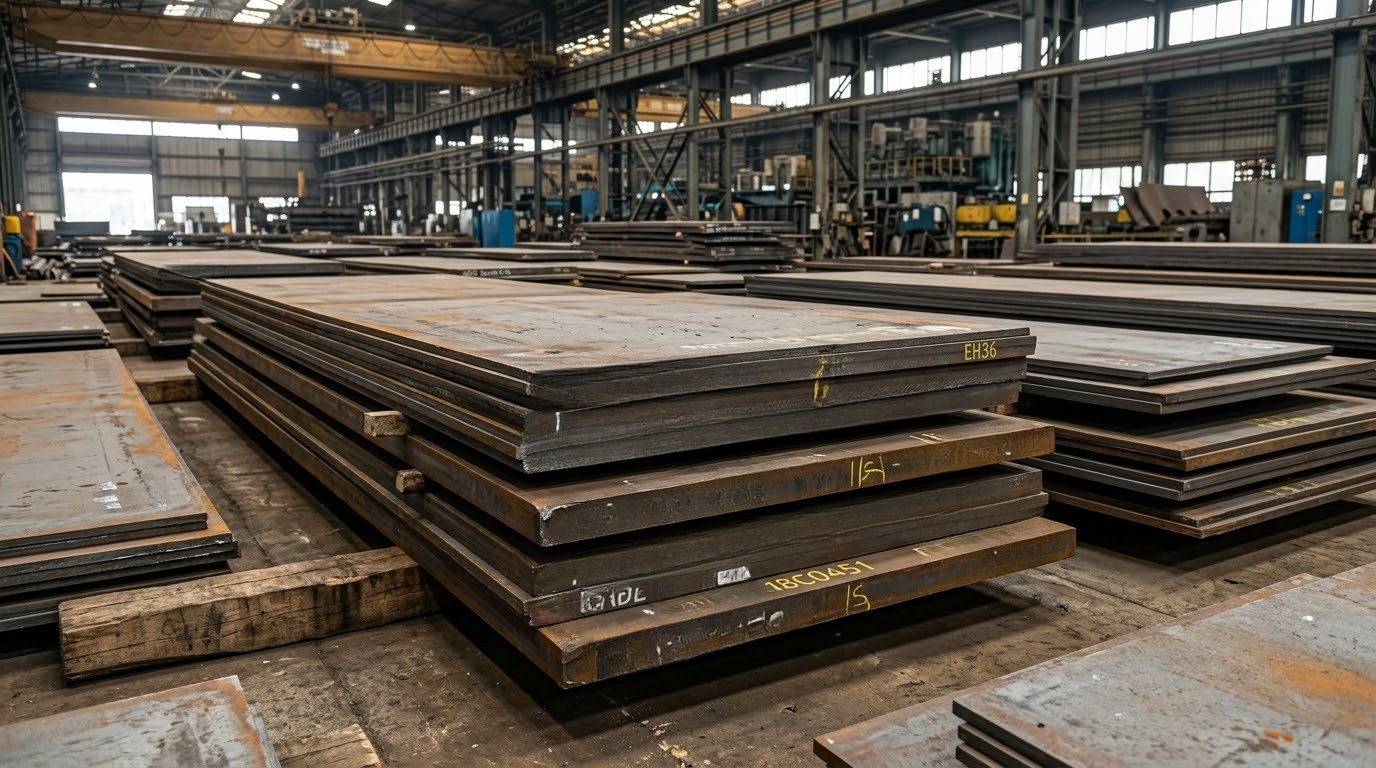
Shipbuilding steel plates are structural steel products manufactured and tested for marine construction, not general structural steel repurposed from buildings or standard fabrication work. Hull structures carry dynamic wave loading, vibration, and constant exposure to seawater, so the material needs controlled chemistry and verified mechanical properties. Ordinary mild steel does not go through this level of testing. Marine-grade plates are selected against the applicable classification society requirements, which is why Ship Building Plates from Stolt Steel are supplied against defined grade and certification requirements.
Key Factors When Selecting Shipbuilding Plates
Several factors determine which plate suits a hull section, and none work on their own.
Steel Grade and Required Strength
The required grade depends on the vessel design, the structural location on the hull, the loading conditions, and the applicable classification requirements. Matching the grade to the approved design matters more than assuming higher strength is automatically the safer choice. No single shipbuilding steel plate grade works across every hull section.
Plate Thickness and Hull Section
Plate thickness follows the hull design, structural loads, stiffener arrangement, and location within the vessel, not a fixed rule of thumb. Engineering calculations set the thickness for each section. Specifying a heavier plate does not fix an incorrect design assumption; it only adds weight the vessel does not need.
Toughness and Low-Temperature Requirements
Impact toughness affects how a hull plate behaves under sudden loading, particularly for vessels in colder water. A plate can meet strength requirements and still fall short on a toughness test at low temperature. The applicable grade and classification rules define which values apply, and these need verification.
Weldability and Fabrication
Hull construction involves extensive cutting, forming, and welding, so weldability carries as much weight as strength when selecting a plate. Chemical composition, thickness, welding procedure, and fabrication all interact during construction. A plate that welds well under one procedure may behave differently under another. Welding procedures are qualified against the actual grade and thickness in use.
Corrosion and Marine Exposure
Hull plates sit in a marine environment for the working life of the vessel, and material selection is only one part of managing that exposure. Marine steel plates are not corrosion-proof on their own. Coating systems, cathodic protection, and maintenance schedules work alongside the plate specification, and none of these replace the others.
Common Shipbuilding Plate Grades
Grades such as A, B, D, and E appear across classification society rules and cover different strength and toughness combinations used in hull construction. Higher strength grades get specified where the vessel design calls for reduced plate weight or where loads exceed what standard grades handle. The grade used for one hull section will not match the grade used elsewhere on the same vessel. Shipbuilding steel plate grades exist to match material properties to structural demand, not to offer one default choice.
Classification and Standards to Verify
Plate selection for hull construction has to comply with the vessel’s applicable classification society and the project specification, since these define the grade, mechanical properties, and testing requirements that apply. Depending on the project, this may involve ABS, DNV, Lloyd’s Register, or Bureau Veritas, though not every project runs under all of these at once. Procurement documentation should confirm the grade, dimensions, mechanical properties, testing method, inspection stage, and certification before the order is placed.
Shipbuilding Plate Selection Checklist
Plate selection comes down to a sequence of checks, and each step depends on the one before it.
- Identify the vessel type and the specific hull section the plate is meant for.
- Confirm the classification society requirements that apply to that hull section.
- Select the steel grade that matches the approved design and the classification requirements.
- Determine the plate thickness from the approved design calculations rather than a general assumption.
- Check that the strength and toughness values meet what the design and classification rules specify.
- Review the welding and fabrication requirements against the plate grade and thickness chosen.
- Confirm the plate dimensions and tolerances match the design drawings and project specifications.
- Verify inspection reports, testing certificates, and classification documentation before the plate enters fabrication.
- Final plate selection follows the approved vessel design and the classification requirements for the project, not a specification carried over from another vessel.